
Home / Pool math / Filtration rate vs turnover flow
Advanced operator drill · free · no signup
Filtration rate vs turnover flow
How do you calculate a pool's filtration rate?
Divide the system flow in gallons per minute by the filter's surface area in square feet to get gallons per minute per square foot. Compare that to the filter type's maximum: roughly 15 for high-rate sand, 2 for diatomaceous earth, and 0.375 for cartridge. To size a filter, divide the flow by the maximum rate.
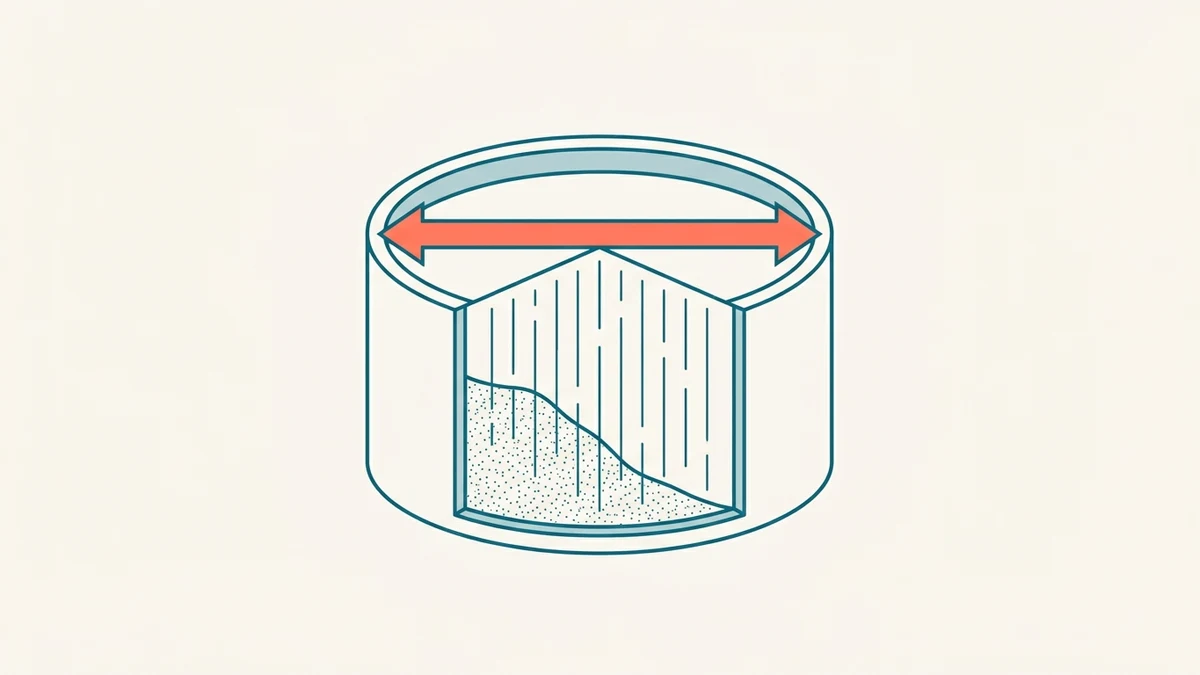
Filtration rate (gpm per sq ft) = system flow (gpm) / filter surface area (sq ft). It is capped by filter type: high-rate sand near 15 gpm per sq ft, diatomaceous earth near 2, cartridge near 0.375. Required filter area = flow / the maximum rate for that filter.
The formula, worked
Common slip Confusing filtration rate (through each square foot of filter) with turnover flow (through the whole pool), or checking the number against the wrong filter type's limit. Cartridge and DE limits are far lower than sand. Verify the maximum rate against local code and the Model Aquatic Health Code.
Where this shows up
Filtration rate takes the flow rate from the turnover calculation and divides by the physical filter area, so it depends on flow rate directly. The practice test drills the filtration and circulation knowledge these limits come from.
Pool chemistry calculator Knowledge practice test All pool-math domains
Problem set: 6 worked problems
Each problem is original, authored from the underlying non-copyrightable relationship, with the full worked solution and the exact slip that produces each wrong answer. Work the problem before opening the solution. For a timed, randomized run with a per-topic score, use the free knowledge practice test.
Watch for Filtration rate is flow per square foot of filter, a different number from the turnover flow through the whole pool. Each filter type has its own maximum: high-rate sand near 15 gpm per square foot, diatomaceous earth near 2, cartridge near 0.375. Checking a number against the wrong filter type is the classic miss. Verify limits against local code and the Model Aquatic Health Code.
-
A system moves 300 gpm through a 15 sq ft high-rate sand filter. What is the filtration rate, and is it within the roughly 15 gpm per sq ft sand limit?
- A 0.05 gpm per sq ft (fine)
- B 4,500 gpm per sq ft (over)
- C 15 gpm per sq ft (at the limit)
- D 20 gpm per sq ft (over the ~15 limit)
Show the worked solution
Correct answer: D. 20 gpm per sq ft (over the ~15 limit)
Filtration rate = flow / area = 300 / 15 = 20 gpm per sq ft, which is above the roughly 15 gpm per sq ft high-rate sand maximum, so the filter is undersized. Multiplying flow by area (4,500) instead of dividing is the setup error.
Source: Public relationship: filtration rate (gpm per sq ft) = system flow (gpm) / filter surface area (sq ft)
-
How much high-rate sand filter area does a 450 gpm system need at the roughly 15 gpm per sq ft maximum?
- A 6,750 sq ft
- B 45 sq ft
- C 0.03 sq ft
- D 30 sq ft
Show the worked solution
Correct answer: D. 30 sq ft
Required area = flow / max rate = 450 / 15 = 30 sq ft. Multiplying 450 by 15 (6,750) instead of dividing is the common inversion.
Source: Public relationship: required filter area = flow / maximum filtration rate for the filter type
-
A 200 gpm system uses a diatomaceous-earth (DE) filter with a maximum of about 2 gpm per sq ft. How much filter area does it need?
- A 13 sq ft
- B 400 sq ft
- C 50 sq ft
- D 100 sq ft
Show the worked solution
Correct answer: D. 100 sq ft
Required area = 200 / 2 = 100 sq ft. Using the sand limit of 15 by mistake gives 200 / 15 = 13 sq ft and undersizes the DE filter almost eight-fold, the wrong-filter-type error.
Source: Public relationship: required area = flow / maximum rate; DE maximum near 2 gpm per sq ft
-
How does filtration rate differ from turnover flow?
- A They are two names for the same number
- B Turnover flow is measured per square foot of filter
- C Filtration rate is always larger than turnover flow
- D Filtration rate is flow per square foot of filter; turnover flow is total flow through the whole pool
Show the worked solution
Correct answer: D. Filtration rate is flow per square foot of filter; turnover flow is total flow through the whole pool
Turnover flow is the total gallons per minute the system moves to circulate the whole pool; filtration rate takes that flow and divides by the filter's surface area, giving gallons per minute through each square foot of media. They answer different questions.
Source: Public definitions: turnover flow (whole pool) vs filtration rate (per sq ft of filter)
-
A cartridge filter with 80 sq ft of media passes 60 gpm. What is the filtration rate, against the roughly 0.375 gpm per sq ft cartridge limit?
- A 0.375 gpm per sq ft (at the limit)
- B 1.33 gpm per sq ft (fine)
- C 4,800 gpm per sq ft (over)
- D 0.75 gpm per sq ft (about double the ~0.375 limit)
Show the worked solution
Correct answer: D. 0.75 gpm per sq ft (about double the ~0.375 limit)
60 / 80 = 0.75 gpm per sq ft, roughly double the 0.375 cartridge maximum, so this cartridge is undersized for the flow. Cartridge and DE limits are far lower than sand, which is why the filter type must be matched to the number.
Source: Public relationship: filtration rate = flow / area; cartridge maximum near 0.375 gpm per sq ft
-
A 24 sq ft high-rate sand filter passes 300 gpm. Is it within the roughly 15 gpm per sq ft sand limit?
- A 20 gpm per sq ft, over the limit
- B 12.5 gpm per sq ft, over the limit
- C 0.08 gpm per sq ft, fine
- D 12.5 gpm per sq ft, within the ~15 sand limit
Show the worked solution
Correct answer: D. 12.5 gpm per sq ft, within the ~15 sand limit
300 / 24 = 12.5 gpm per sq ft, which is below the roughly 15 gpm per sq ft high-rate sand maximum, so this filter is adequately sized. Dividing area by flow (0.08) inverts the ratio.
Source: Public relationship: filtration rate = flow / area; high-rate sand maximum near 15 gpm per sq ft
Drill the whole exam
Original multiple-choice questions and worked pool-math, free and ungated. No signup; your progress stays on your device.