
What is the Model Aquatic Health Code (MAHC), and how do states use it?
Quick answer
What is the Model Aquatic Health Code (MAHC), and how do states use it?
The Model Aquatic Health Code (MAHC) is a CDC guidance document, not a federal law. It is a voluntary model pool code that states, counties, and tribes can adopt in whole, in part, or modify to fit their needs. The current 2024 fifth edition pulls national best practices into one science-based reference.
Every public pool in the United States operates under a code, but no single national law sets one. Instead, the Centers for Disease Control and Prevention (CDC) publishes the Model Aquatic Health Code (MAHC), a science-based model that states and local health departments can choose to adopt. This guide explains what the MAHC is, why it is voluntary, how jurisdictions use it partially, and the recurring code numbers it sets, so that when a state requirements page says “the state code differs from the MAHC here,” you know exactly what the baseline is.
What the MAHC actually is
The MAHC is guidance from the CDC’s National Center for Emerging and Zoonotic Infectious Diseases, written to help prevent drowning, pool-chemical injuries, and outbreaks of waterborne illness at aquatic venues open to the public: pools, hot tubs and spas, splash pads, and waterparks. Before it existed, every health department that wanted to write or update a pool code had to do its own research, which is a large part of why pool rules vary so much from state to state. The MAHC gathers the current science and best practice into one reference so jurisdictions do not each reinvent it.
The first edition was released in 2014 and it has been updated every few years since. The current version is the 2024 MAHC (5th edition), posted 16 December 2024, made up of a 204-page Code (the model regulatory language) and a 250-page Annex (the scientific rationale behind each provision). CDC develops and maintains it with the Council for the Model Aquatic Health Code (CMAHC), a nonprofit that collects national input, runs a change-request and voting process each cycle, and relays the results to CDC.
Why it is voluntary, and how states adopt it “partially”
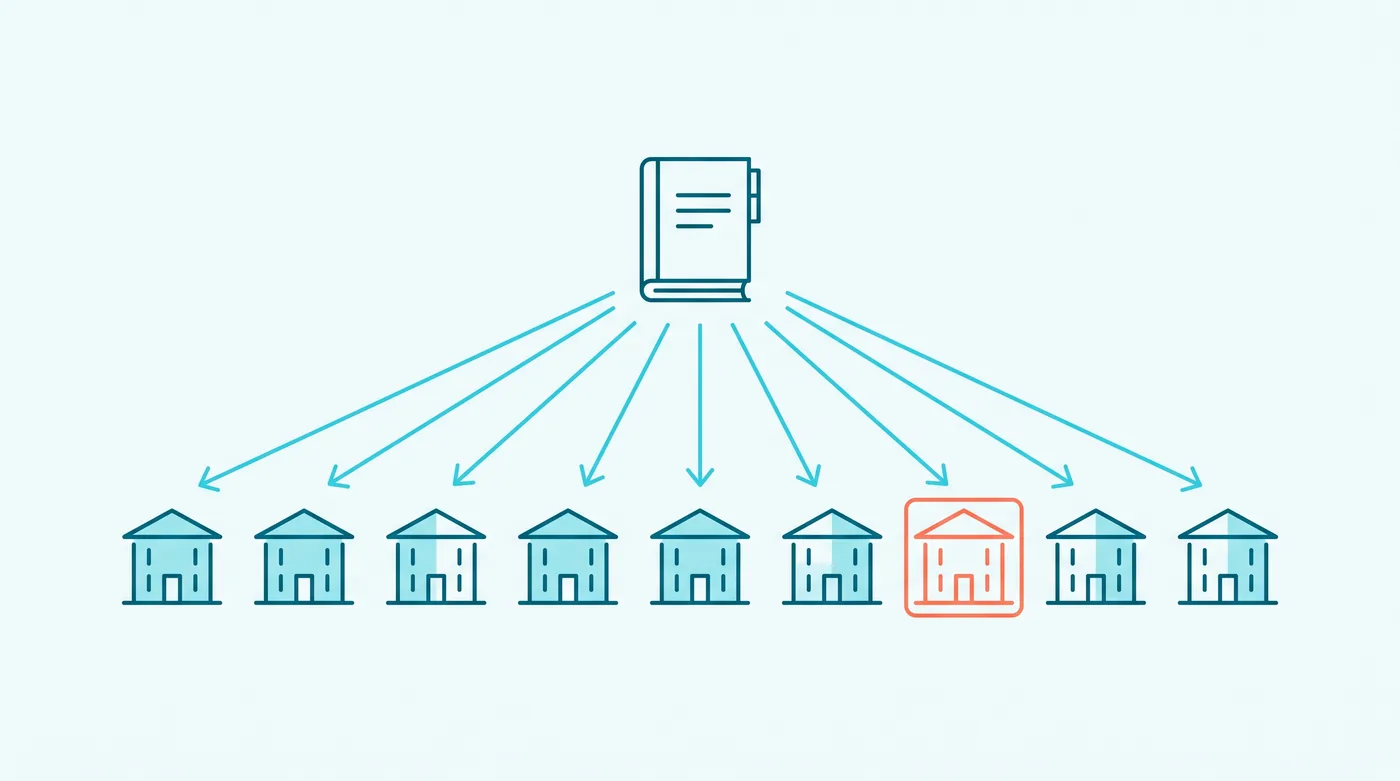
This is the single most important thing to understand: the MAHC is not law anywhere until a jurisdiction chooses to make it law. It is a CDC guidance document, so a local, state, territorial, or tribal jurisdiction can:
- adopt all of it,
- adopt only parts of it,
- modify part or all of it to fit local needs, or
- use it purely as a reference while keeping its own code.
That is what “partial adoption” means in practice. A state health department might lift the MAHC’s chemical limits verbatim, keep its own long-standing turnover rules, and ignore the MAHC’s design chapters entirely. Two states can both say they “follow the MAHC” and still enforce different numbers. Because of that, the MAHC is best understood as the shared national baseline that our state requirements pages measure each state against, noting where the state code matches it and where it diverges, rather than as a rule you can assume applies to your pool.
The recurring MAHC code numbers
These are the figures the 2024 MAHC Code sets that operators encounter most, and the ones the state pages reference as a base. Every number below is from the 2024 MAHC (5th edition) Code, with the code section in parentheses so you can trace it.
Water chemistry limits
- pH: 7.0 to 7.8 (5.7.3.4.1).
- Free chlorine, minimum: 1.0 ppm without cyanuric acid, 2.0 ppm when using cyanuric acid, and 3.0 ppm in spas (5.7.3.1.1.2).
- Free chlorine, maximum: the upper operating limit follows the product label under EPA FIFRA rules; separately, a pool must close if free chlorine exceeds 10 ppm while bathers are present (5.7.3.1.1.5 and 6.6.3.1).
- Combined chlorine (chloramines): take action to reduce it above 0.4 ppm (5.7.4.4.2).
- Cyanuric acid (CYA): kept at 90 ppm or below; a reading of 300 ppm or higher means the venue closes until it is remediated (5.7.3.1.3.2 and 5.7.3.1.3.3).
- Bromine: minimum 3.0 ppm in venues and 4.0 ppm in spas, maximum 8.0 ppm (5.7.3.1.2.2 and 5.7.3.1.2.3).
- Total alkalinity: 60 to 180 ppm (5.7.4.4.1).
- Calcium hardness: 2500 ppm or below (5.7.4.4.3).
- Maximum water temperature: 104 F, or 40 C (5.7.4.7.2).
The pool-chemistry calculator checks a sample against the water-balance range these numbers imply, and the pool-math trainer drills the dosing math to move a reading from where it is to where the code wants it.
Testing frequency
The MAHC sets how often each parameter must be tested, not just its target value:
- Free chlorine (or bromine) and pH: before opening each day, then every 2 hours on a manual feed system or every 4 hours on an automated system while the venue is open (5.7.5.1 to 5.7.5.3).
- Total alkalinity: weekly (5.7.5.5).
- Calcium hardness: monthly (5.7.5.6).
- Cyanuric acid: monthly, or weekly when stabilized chlorine is the primary disinfectant (5.7.5.7).
Turnover (recirculation) times
Turnover time is the volume of the venue divided by the filtration flow rate. The MAHC caps the maximum allowable turnover time by venue type in Table 4.7.1.10 (a shorter time means the whole body of water is filtered more often):
- 0.5 hour or less: interactive water play and splash pads, and spas at 93 to 104 F.
- 1 hour or less: wading pools, plunge pools, and runout slides.
- 2 hours or less: activity pools, lazy rivers, and wave pools.
- 6 hours or less: all other pools (the standard pool default).
- 8 hours or less: diving pools.
The turnover math these depend on is the core of the pool-math trainer.
Bather load (theoretical peak occupancy)
The MAHC does not publish a single “max swimmers” number. Instead it sets density factors in section 4.1.2.3.5.3: the surface area required per bather, which you divide the venue’s surface area by to get its theoretical peak occupancy.
- Flat water (most pools): 20 square feet per bather.
- Agitated water (wave pools and similar): 15 square feet per bather.
- Hot water (spas): 10 square feet per bather.
- Interactive water play: 10 square feet per bather.
- Pool deck: 50 square feet per bather.
How the MAHC relates to the CPO and AFO exams
The MAHC is a facility code: it governs how a pool is designed, built, operated, and maintained. The Certified Pool Operator (CPO) and Aquatic Facility Operator (AFO) are personal certifications: they teach an operator the water chemistry, hydraulics, and safety practice needed to keep a pool inside limits like the ones above. The two fit together. Your health department’s code (often modeled on the MAHC) sets the enforceable rules; your certification is evidence you can meet them. Neither replaces the other, and which certification a jurisdiction accepts is a separate local question covered in the state-specific certifications catalog and tracked in the state requirements matrix.
How to use this on the state pages
When one of our state requirements pages lists a “bather-code delta,” it means the state’s own code sets a number that differs from the MAHC baseline on this page. Reading the two together tells you the whole story: this page gives you the national reference figure, and the state page tells you where your jurisdiction departs from it. Always confirm the operating limits for your specific pool with the health department that inspects it, because the enforceable number is the one in your adopted local code, not the model.
Sources: CDC Model Aquatic Health Code, About the MAHC and Current Edition pages, and the 2024 MAHC (5th Edition) Code (reviewed 2026-07-24). All figures are from the 2024 MAHC Code with the section cited inline; the MAHC is CDC guidance that becomes enforceable only where a jurisdiction adopts it, so confirm the operating limits for your pool with your local health department. Pool Operator Prep is independent and not affiliated with the CDC, CMAHC, PHTA, or NRPA.